| |
program committee
|
Conference Chair - program committee
|
 |
 |
 |
| |
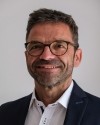
Prof. Dr.
Dietmar Koch
University Augsburg
|
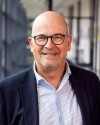
Prof. Dr.
Ralf Goller
Technical University of
Applied
Sciences Augsburg
|
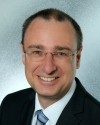
Dr.
Martin Christ
VM&P GmbH, Augs-burg
|
Poster show and poster competition
Eligibility requirements:
- All participants in KERAMIK 2026 with a poster submission accepted by the program committee are eligible to participate in the poster competition.
- Participants in the Hans-Walter-Hennicke lecture competition are not eligible to participate.
|
 |
|
|
| |
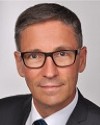
PD Dr.
Guido Falk
Saarland University,
Saarbrücken
|
|
|
Hans-Walter-Hennicke lecture competition
In memory of Prof. Dr. Hans-Walter Hennicke, the DKG has been awarding the Hans-Walter-Hennicke lecture prize since 1995, which honors the best lectures given by young ceramists on their final theses during the DKG annual conference.
|
 |
|
|
|
Eligibility requirements:
|
Dr.
Fabian
Luthardt
Morgan Advanced Materials
Haldenwanger GmbH,
Waldkraiburg
|
Prof. Dr.
Dietmar Koch
University Augsburg
|
|
TOPIC 01 - Recycling & Circular Economy
Subtopics:
Recycling, secondary raw materials, process residues, circular economy concepts, design for circularity, substitution of critical raw materials, powder synthesis from secondary sources, life cycle assessment, regulatory and governance frameworks
|
 |
 |
 |
|
The transformation towards a resource-efficient ceramic industry requires closed material loops and a significantly increased use of secondary raw materials.
In addition to the recovery and conditioning of ceramic residues, alternative raw material sources, urban mining and industrial by-products are gaining importance.
At the same time, efficient collection, take-back and sorting systems, supported by appropriate legislation, governance structures and clear accountability, are often still lacking and need to be developed.
For structural, functional and silicate ceramics, this leads to new demands on characterization, process control, quality assurance and component performance.
|
Dr.
Angelika Priese
DKG e. V.,
Cologne
|
Dr.
Nadja Kratz
FGK Höhr-Grenzhausen
|
Dr.
Stefan Wild
ESK-SIC GmbH
|
|
The TOPIC 01 therefore addresses the entire chain from collection and processing of residues to their re-use in high-value applications, including ecological, economic and regulatory assessment.
Key aspects include, among others:
|
 |
 |
|
- Strategies for recovery, sorting and conditioning of ceramic residues, scrap and sludges
- Development, characterization and processing of secondary raw materials and alternative raw material sources (e.g. by-products, urban mining)
- Integration of recycled materials into powder processing, forming and sintering, and their influence on microstructure and properties
- Design for circularity: material and process design for circular ceramic products
- Substitution of critical or CO?-intensive raw materials by recycled or alternative materials
- Legislative, governance and accountability frameworks enabling efficient collection, take-back and recycling systems (including incentives)
- Life cycle assessment, environmental footprint and techno-economic evaluation of ceramic circularity concepts
|
Prof. Dr.
Michael Stelter
Fraunhofer IKTS, Hermsdorf
|
Prof. Dr.
Rosa Urbano
Gutierrez
Manchester
School of Architecturer
|
|
TOPIC 02 - Material & Process Optimization, Additive Manufacturing
Subtopics:
Shaping, Machining, Green and Hard Machining, Thermal Processes, Sintering, Automation, Additive Manufacturing
|
|
 |
 |
|
The latest developments in the key points of emissions trading (ETS), the planned introduction of the Carbon Border Adjustment Mechanism (CBAM), the switch from fossil fuels to renewable alternatives in energy supply to achieve climate
neutrality in industry by 2050, the automation of processes, and the potential supply risk of critical material resources
are forcing the ceramics industry to further develop resource- and raw material-saving processes, new material formulations, and to make far-reaching adjustments and technical innovations in ceramic process technology.
The TOPIC 02 is a forum for promoting these technical innovations at the interface of materials science, process engineering, and application.
|
PD Dr.
Guido Falk
Saarland University,
Saarbrücken
|
Prof. Dr.
Jens Günster
BAM Berlin
|
Prof. Dr.
Frank Kern
University
Stuttgart
|
Leading scientists will report on current findings and the latest process engineering developments along the ceramic process
chain (ceramic shaping, green body preparation, thermal processing and sintering techniques, and finishing) as well as oncurrent results in the fields of additive manufacturing, multi-material printing, large-format printing, and process automation. |
 |
|
|
|
Below you will find a list of all planned lecture series divided into the specialist topics of ceramic process engineering:
- Shaping
- Machining, green and hard machining
- Thermal processes, sintering
- Additive manufacturing
- Processes for materials in extreme applications
- Automation
|
Dr.
Marcus Emmel
FGK Höhr-Grenzhausen
|
|
|
TOPIC 03 - Characterization
Subtopics:
Characterization, modelling and simulation of porous and dense ceramic materials in the entire process chain from manufacturing to application.
|
 |
 |
 |
|
The TOPIC 03 equally addresses the establishment and use of new as well as existing testing and characterization
methods as well as the use of simulation and modelling methods from material to (micro-)structure and on to processes and applications.
Examples may include:
- New and established testing as well as methodological characterization procedures for physical properties and in-process testing in the processing of ceramic materials.
- New methods for characterization and determination of the microstructure and its structural description and properties of porous ceramic materials
- New approaches in material modeling and use of process and application simulation in the value chain of ceramic materials
- New methods for the determination and optimization of thermomechanical properties of ceramic materials.
- New methods and processes for increasing the reliability of ceramic components
|
PD Dr.
Tobias Fey
FAU Erlangen-Nuremberg
|
Prof Dr.
Verena
Merklinger
University of Applied
Science Konstanz
|
Prof. Dr.
Eduardo Saiz
Imperial College London
|
TOPIC 04 - Simulation, Digitalization & Artificial Intelligence
Subtopics:
Process simulation, production process optimization, lifetime prediction, AI-based materials and process development and design
|
 |
|
|
| Due to complex process chains and increasing demands on component functionality, complexity, and reliability, the manufacturing and processing of ceramic components increasingly require model- and data-driven development approaches.
Simulation, digitalization, and artificial intelligence (AI) offer new opportunities to comprehensively understand, predict, and purposefully optimize material and component properties along the entire production chain.
|
M.Sc.
Yuanbin Deng
RWTH Aachen
|
Dr.
Martin Christ
VM&P GmbH,
Augsburg
|
PD Dr.
Tobias Fey
FAU Erlangen-Nuremberg
|
|
The focus includes, but is not limited to:
- Numerical simulation of the manufacturing route from raw material preparation through shaping and sintering to final components
|
 |
|
|
- Digitalization and data-driven optimization of production processes
- Artificial intelligence and machine learning for process monitoring, control, and quality prediction
- Multiphysics modelling of conventional and additive manufacturing processes
- Damage, failure, and lifetime prediction of ceramic components during service
|
Dr.
Anke Kaletsch
RWTH Aachen
|
|
|
TOPIC 05 - Sanitary Ceramics, Porcelain & Building Materials
|
 |
 |
 |
Sanitaryware, porcelain and ceramic building materials represent a traditional yet at the same time highly dynamic group of materials from a technological standpoint.
Their applications range from sanitary and domestic ceramics through household and utility porcelain to functional and aesthetic solutions in modern construction as well as in electrotechnical applications.
Increasing demands regarding energy efficiency, decarbonisation, raw-material security and closed-loop material cycles are currently shaping the development of these products and are leading to far-reaching changes along the entire process chain. |
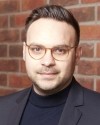
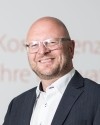
Giuseppe Noto
Villeroy & Boch AG
|
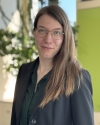
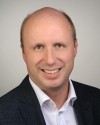
Dipl.-Ing.
Daniela Hesky
IAB Weimar
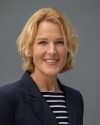
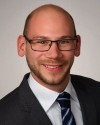
|
Prof. Dr.
Pascal Seffern
University of Applied Science
Koblenz
|
|
The TOPIC 05 aims to equally address all material and application segments – from classical and technical porcelain and sanitaryware through to architectural and building ceramics. Contributions from both academia and industry are explicitly encouraged.
This topic provides a platform to discuss current technological developments, challenges and innovation fields in sanitaryware, porcelain and building ceramics.
|
 |
 |
|
|
Examples of possible topics include:
- Influence of alternative sintering and firing technologies as well as new energy carriers on glaze and product properties
- Use of recycled and secondary raw materials and their impact on processing behaviour and product properties
- New approaches in glaze development, surface modification and functionalisation
- Processing behaviour of ceramic bodies and their characterisation
- Process optimisation along the entire value chain: drying, thermal processing and digitalisation
- Ceramic building materials for architecture and interior applications
|
Ir.
Marcel Engels
FGK Höhr-Grenzhausen
|
Siegmund Meyer
BHS tabletop AG
|
|
TOPIC 06 - Refractory, HT and UHT Applications
Subtopics:
Refractories, refractory materials and technology
|
 |
 |
 |
|
Refractory materials (ceramics, metals, composites) are used in high-temperature applications up to 1600°C but have to withstand temperatures of up to 3000°C for short periods in specific extreme environments.
Without refractories, the power generation and smart technologies as well as the production of basic materials such as metals, cement, or ceramics couldn’t be realized.
Hence, refractory ceramics are indispensable for the modern society and a livable environment.
The goals of CO2 reduction, the use of hydrogen in thermal processes and the continuing introduction of automatisation, digitalisation and modeling in these processes are closely linked to developments in the field of high-temperature materials.
The design of their macro- and microstructure opens a broad innovation potential for new process technologies and new product qualities under challenging economic and environmental constraints.
The focus is on the following topics, among others:
- Basic research in the field of high- and ultra-high temperature applications
- Refractory products for metallurgy, the chemical industry, energy production and other applications
- Refractory ceramics for extreme environments
- Raw materials
- Application of AI, automation, digitalization and modeling in the refractory sector
- Sustainability issues related to high- and ultra-high temperature ceramics
|
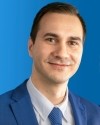
PD Dr.
Patrick Gehre
TU Bergakademie Freiberg
|
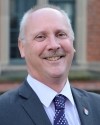
Prof. Dr.
Jon Binner
University of Birmingham
|
Dr.
Volker Uhlig
UTF GmbH,
Freiberg
|
TOPIC 07 - Ceramic Filters, Membranes & Foams
Subtopics:
Ceramic foams, filters and membranes
|
 |
 |
|
|
Ceramics with defined pore sizes and high open porosity are widely used as catalyst supports, hot gas filters, and
filtration membranes in energy and environmental technology, chemical process engineering, food technology, medicine, and biotechnology.
Pore size ranges from 10 µm to less than 1 nm are covered.
This broad pore range is achieved through various manufacturing processes (foaming, pore formation, thick-film and thin-film techniques) and with different materials (silicates, oxides, non-oxides, zeolites).
The focus is on the following topics, among others:
- Manufacturing processes for porous ceramics
- Preparation of ceramic membranes
- Characterization methods for evaluating porosity, pore size, and pore shape
- Applications of porous ceramics
|
Prof. Dr.
Ingolf Voigt
Fraunhofer IKTS, Hermsdorf
|
Dr.
Phillipp Gingter
Schunk Ingenieurkeramik
GmbH |
PD Dr.
Tobias Fey
FAU Erlangen-Nuremberg
|
TOPIC 08 - Ceramics for Energy Technology, Sensors & Electronics
Subtopics:
Ceramics for Energy Conversion and Storage, Ceramics for Electrical Engineering and Sensor Technology
|
 |
 |
 |
|
The TOPIC 08 will present new developments in the field of functional ceramic materials and technologies,
which are used particularly in the fields of electrical engineering, sensor technology, and energy conversion and storage.
It will address fundamental issues (e.g., structure-property relationships, porosity design, charge transport processes,
defect chemistry), technology-oriented aspects of material production and processing (e.g., coatings, sintering processes, multilayers, and application-specific additive manufacturing routes for functional ceramics), as well as systems and applications
(devices, components, systems, characterization, modeling).
|
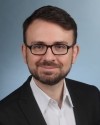
Prof. Dr.
Jörg Töpfer
EAH Jena
|
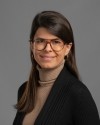
Prof. Dr.
Till Frömling
TU Darmstadt
|
Prof. Dr.
Suelen Barg
University
Augsburg
|
In addition to established ceramic systems, the symposium welcomes contributions on emerging functional materials,
including 2D ceramics (e.g. transition-metal carbides/nitrides (MXenes), layered double hydroxides, oxide nanosheets, and h-BN) highlighting the expanding landscape of functional ceramics and their potential for innovative device concepts.
Studies on recycling or resource efficiency specifically related to functional ceramic materials used in the symposium’s application areas are likewise encouraged. |
 |
|
|
|
Contributions from science and industry are welcome to discuss advances in the understanding of the structure/ microstructure/property relationships of functional ceramics, their technology, and their application.
The focus is on the following application topics:
- Ceramics for energy storage and conversion
- Electroceramics and sensor technology
As well as the underlying functional properties:
- Dielectric, ferroelectric, and piezoelectric material properties
- Solid-state conduction, i.e. semiconductor, ionic, electronic, and mixed conduction
- Magnetic and magneto- and thermoelectric ceramic materials
- Defect chemistry and transport properties
- Modeling, simulation, and in situ characterization techniques
- AND the associated manufacturing, processing, and coating processes
|
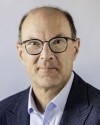
Hon.-Prof.
Dr. Norbert H. Menzler
Forschungs-zentrum Jülich
|
|
|
TOPIC 09 - Bioceramics
Subtopics:
Bioceramics, bone substitute materials, bioactive materials, bio-functionalization
|
 |
 |
 |
|
Bioceramics – Ceramics for Applications in Healthcare, Pharmacy, and Biotechnology
The TOPIC 09 focuses on the broad field of bioceramics as well as bioactive glasses and composite materials for healthcare applications, including medical, pharmaceutical, and biotechnological uses.
All variants of bioceramics are addressed, including bioinert ceramics for implants and prostheses, bioactive ceramics and
glasses for tissue engineering, and advanced applications such as medical imaging, controlled drug delivery, and cancer treatment, as well as their use in bioreactors.
|
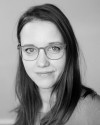
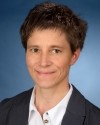
Dr.
Franziska
Schmidt
Charité Berlin
|
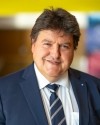
Dr.
Sabine Begand
Fraunhofer IKTS, Hermsdorf
|
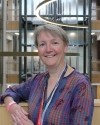
Prof. Dr.
Aldo
Boccaccini
FAU Erlangen-Nuremberg
|
|
The presentations will cover both fundamental scientific and technological aspects related to the design, processing, characterization, and application of bioceramics in established and emerging fields.
The symposium covers topics including:
|
 |
|
|
- Bioceramics for medical implants and dental applications
- Bioactive scaffolds for tissue engineering
- Bone substitution, regeneration, and reconstruction
- Bioceramics for therapeutic ion and drug delivery
- Ceramics in nanomedicine
- Ceramics in biotechnology
- Ceramic–biopolymer composite materials
|
Prof. Dr.
Louise M. Jennings
University of Leeds
|
|
|
TOPIC 10 - Historiy and Ceramics
The TOPIC10 covers the entire spectrum of ceramics from a historical perspective. Culturally and historically significant developments are also considered in this context.
The symposium is intended to celebrate the development of the ceramics industry and research, and its role in the development of new technologies and industries.
|
 |
|
|
|
The focus is on the following topics, among others:
- Raw materials through the ages
- Materials developments as the key to new technologies and markets
- Research and education in light of industry developments
- Emergence of key regions for ceramics in Germany
- Ceramic materials in art
- 100 Years of the Kaiser Wilhelm Institute for Silicate Research (Berlin-Dahlem) and its Successors
|
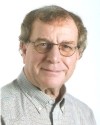
Dr.
Uwe Reichel
DKG e. V.,
Cologne
|
|
|
TOPIC 11 - Ceramic Fiber Composites / AK Reinforcement of Ceramic Materials
Subtopics:
New manufacturing and process technologies, sustainable production of CMC, use of AI in materials and process development, repair and recycling
|
|
 |
 |
|
Fiber-reinforced ceramics (CMC, ceramic matrix composites) are characterized by high damage tolerance and are particularly suitable for applications at high temperatures and in corrosive atmospheres.
They are used in high-temperature lightweight construction in aerospace engineering, as well as in energy, combustion, and process engineering.
The TOPIC 11 will address current developments in this material group. Contributions on the following topics are particularly welcome:
|
Prof. Dr.
Dietmar Koch
University
Augsburg
|
Walter Pritzkow
Walter E. C.
Pritzkow Spezialkeramik
|
Dr.
Oriol Gavalda-Diaz
Imperial College London
|
- New manufacturing and process technologies
- Sustainable production of CMC
- Use of AI in CMC material and process development
- Simulation and modeling of properties and processes
- Joining, integration, repair, and recycling
- Resource efficiency and life cycle assessment
- Properties of ceramic fiber composites and their components under application-relevant conditions
- New applications (friction, aviation, aerospace, industrial applications)
|
Dr.
Johanna Schmidt
Schunk Kohlenstoff-technik
GmbH
|
Andreas Kienzle
BJS Ceramics GmbH
|
|
TOPIC 12 - DKN Young Researchers
Subtopics:
Young Researchers, Promotion of young talents, Career
|
 |
 |
 |
|
The TOPIC 12 is dedicated to supporting and showcasing the next generation of researchers.
Early-career researchers attending their first conference or preparing their first scientific talk will find a space to present their work and gain visibility within the community.
At the same time, the session offers institutes, research groups, and companies a platform to highlight their initiatives for fostering young talent.
We also welcome individuals who wish to share their own career journeys—whether traditional, nonlinear, or unconventional.
|
Dipl.-Ing.
Patricia Kaiser
TU Bergakademie Freiberg
|
M.Sc.
Michelle Weichelt
FAU Erlangen-Nuremberg
|
M.Sc.
Moritz Steiner
University Cologne
|
|
Together, we create an open environment for exchange, inspiration, and connected learning around the diverse paths in research and development.
The focus is on the following topics, among others:
|
 |
|
|
- Presentations and research contributions from early-career researchers
- Insights into talent development initiatives at institutes and companies
- Personal career stories from diverse professional paths
- Networking and exchange within the early-career research community
|
M.Sc.
Edwyn Wolf
FAU Erlangen-Nuremberg
|
|
|

